


AI Readiness Checklist for Businesses: Are You Actually Ready for AI?
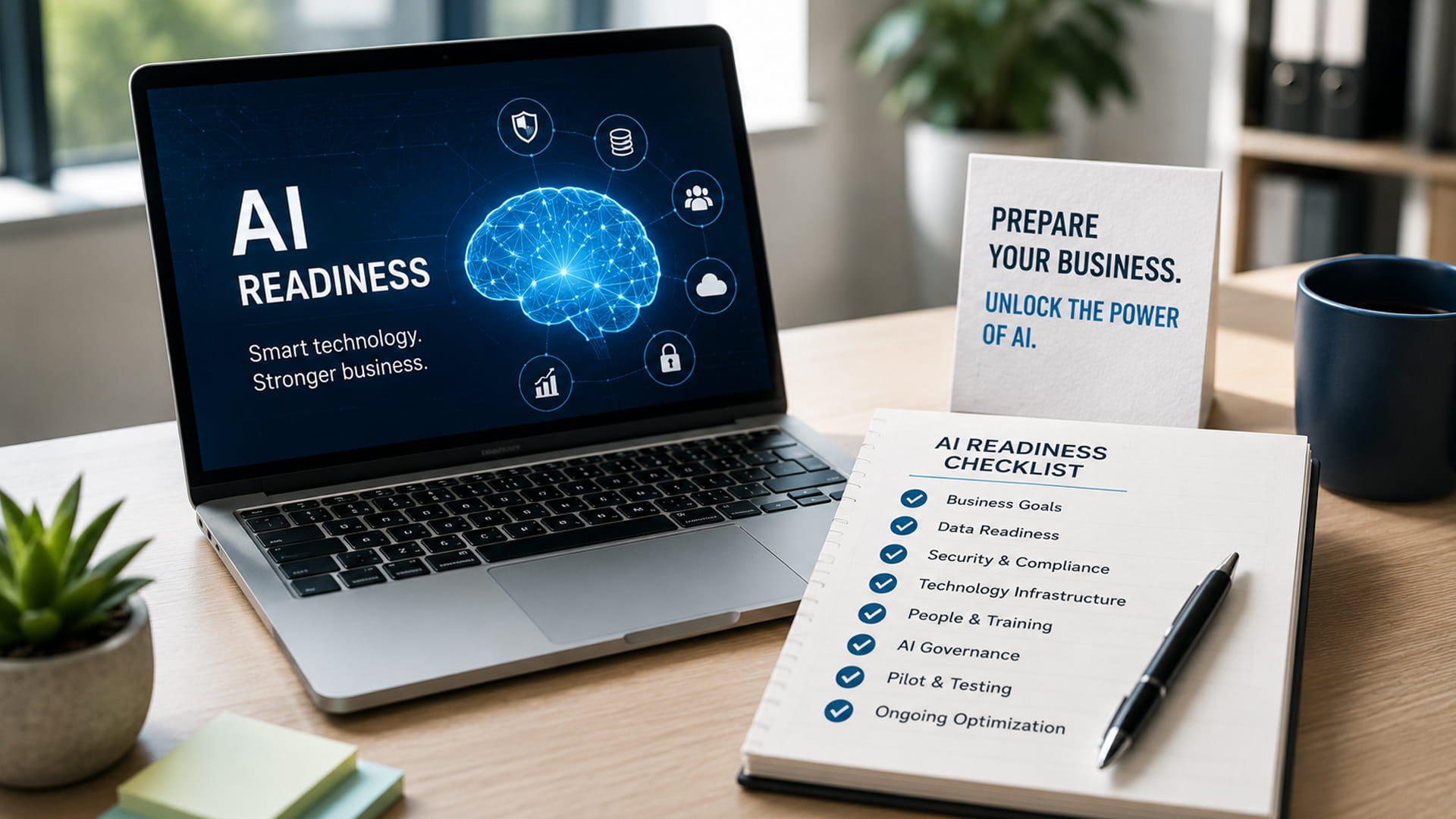
Artificial intelligence is transforming how businesses operate, automate tasks, and improve decision-making.
Many organizations are exploring AI tools like ChatGPT, Microsoft Copilot, and industry-specific AI solutions. However, successful AI adoption requires more than simply purchasing a tool and giving employees access.
Businesses often struggle with AI implementation because their data, security practices, and IT infrastructure are not prepared.
In 2026, organizations need a clear AI readiness strategy to ensure AI tools deliver value while protecting sensitive business information.
An AI readiness assessment helps businesses identify technology gaps, security risks, and opportunities before implementing AI solutions.
Quick Answer: What Is an AI Readiness Checklist?
- An AI readiness checklist helps businesses evaluate whether they have the right foundation for AI adoption.
- It reviews data quality, security, infrastructure, employee readiness, and business goals.
- Businesses need organized data and secure systems before implementing AI tools.
- AI readiness reduces implementation risks and improves technology outcomes.
- Managed IT providers help organizations prepare their environments for secure AI adoption.
What Is AI Readiness?
AI readiness refers to a business’s ability to successfully implement and use artificial intelligence tools.
A company is AI-ready when it has the necessary:
- Technology infrastructure
- Data management practices
- Security controls
- Employee processes
- Business objectives
Many businesses focus only on choosing an AI platform, but the success of AI depends on the foundation behind it.
For example, an AI assistant can only provide valuable results when it has access to accurate, organized, and secure information.
Without proper preparation, businesses may experience:
- Incorrect AI outputs
- Security risks
- Poor employee adoption
- Compliance concerns
- Wasted technology investments
AI readiness ensures organizations approach AI strategically instead of adopting tools without a clear plan.
Why AI Readiness Matters in 2026
AI adoption is accelerating across industries, but businesses must balance innovation with security and operational control.
Organizations are using AI for:
- Customer service
- Data analysis
- Marketing automation
- Employee productivity
- Business decision support
However, increased AI usage creates new challenges.
AI Depends on Quality Data
AI systems rely on information to generate useful results.
Poor data quality can lead to:
- Incorrect insights
- Inconsistent responses
- Unreliable automation
Businesses need organized, accurate, and accessible data before implementing AI.
AI Creates New Security Concerns
AI tools can introduce risks when employees upload sensitive information into unsecured platforms.
Potential risks include:
- Data exposure
- Unauthorized access
- Information leakage
- Compliance violations
Security planning is essential before allowing widespread AI adoption.
AI Requires Strong IT Infrastructure
AI applications depend on reliable technology environments.
Businesses may need:
- Secure cloud systems
- Updated devices
- Network reliability
- Access controls
- Data protection strategies
A strong IT foundation improves AI performance and reduces risk.
Employees Need AI Training
Technology adoption depends on people.
Employees need guidance on:
- Using AI responsibly
- Protecting company information
- Understanding AI limitations
- Following AI policies
AI Readiness Checklist: 8 Areas Businesses Should Evaluate
1. Define Clear AI Business Goals
Before implementing AI tools, businesses should identify what they want AI to accomplish.
Common goals include:
- Improving productivity
- Automating repetitive tasks
- Improving customer experiences
- Reducing operational costs
- Supporting better decisions
A clear objective helps organizations select the right AI solutions.
2. Evaluate Data Quality and Accessibility
Data is the foundation of successful AI implementation.
Businesses should review:
- Where data is stored
- Data accuracy
- Data organization
- Access permissions
- Data protection practices
Poorly managed data can limit AI effectiveness.
3. Review Cybersecurity Protection
AI adoption requires strong security controls.
Businesses should evaluate:
- Identity management
- User permissions
- Data protection
- Security monitoring
- Employee access
Security should be considered before deploying AI tools.
4. Assess Cloud and IT Infrastructure
AI applications often depend on modern technology environments.
Businesses should review:
- Cloud capabilities
- Network performance
- Device readiness
- Software compatibility
- Storage requirements
An outdated infrastructure can slow AI adoption.
5. Create AI Usage Policies
Businesses need clear guidelines for employees using AI tools.
AI policies should address:
- Approved AI applications
- Data sharing rules
- Security expectations
- Acceptable usage
- Compliance requirements
Clear policies help prevent unnecessary risks.
6. Prepare Employees for AI Adoption
Employees need training to use AI effectively.
Training should cover:
- AI capabilities
- Proper usage
- Security practices
- Prompt quality
- Business applications
A trained workforce improves AI success.
7. Review Compliance Requirements
Organizations must consider how AI impacts industry regulations.
Important considerations include:
- Data privacy
- Customer information protection
- Industry requirements
- Internal policies
Compliance planning helps businesses avoid unnecessary risks.
8. Establish Ongoing AI Management
AI implementation is not a one-time project.
Businesses should continuously review:
- AI performance
- Security controls
- Employee adoption
- Business outcomes
Continuous improvement helps organizations maximize AI value.
Risks of Implementing AI Without Preparation
Businesses that adopt AI without proper planning may face several challenges.
Data Security Risks
Employees may accidentally share confidential information with AI tools.
This can expose:
- Customer data
- Financial information
- Internal documents
- Proprietary information
Poor AI Results
AI tools depend on accurate information.
Poor data management can result in:
- Incorrect recommendations
- Unreliable automation
- Low-quality outputs
Compliance Issues
Businesses must ensure AI usage aligns with privacy and security requirements.
Improper AI adoption can create regulatory concerns.
Wasted Technology Investment
Without clear goals and preparation, businesses may invest in AI tools that do not provide meaningful value.
How Managed IT Providers Help Businesses Prepare for AI
AI readiness requires a combination of technology expertise, cybersecurity knowledge, and strategic planning.
Managed IT providers help businesses prepare by supporting:
- Technology assessments
- Cloud readiness
- Data organization
- Security improvements
- AI policy development
- Infrastructure optimization
An MSP helps organizations create a secure foundation before implementing AI solutions.
Rather than adopting AI without direction, businesses can develop a structured approach that improves results and reduces risk.
Learn more about managed IT services and how technology experts can help prepare your business for AI adoption.
Step-by-Step AI Readiness Framework
Step 1: AI Readiness Assessment
Businesses should evaluate their current environment.
This includes reviewing:
- IT infrastructure
- Data systems
- Security practices
- Business goals
Step 2: Risk Identification
Organizations should identify barriers to successful AI adoption.
Common risks include:
- Data security gaps
- Poor infrastructure
- Lack of policies
- Employee concerns
Step 3: AI Implementation Planning
Businesses should create a roadmap that includes:
- Technology selection
- Security requirements
- Employee training
- Implementation timelines
Step 4: Monitoring and Optimization
After implementation, businesses should review:
- AI performance
- Security activity
- User adoption
- Business outcomes
Step 5: Continuous Improvement
AI strategies should evolve as technology changes.
Regular updates help organizations improve efficiency and maintain security.
AI Readiness Use Cases Across Industries
Healthcare
Healthcare organizations use AI to support administrative efficiency, data analysis, and patient service improvements while protecting sensitive information.
Finance
Financial organizations use AI for analytics, fraud detection, and operational automation with strong security controls.
Legal
Law firms use AI to improve document management, research, and workflow efficiency while protecting confidential client data.
Retail
Retail businesses use AI for customer insights, inventory management, and personalized experiences.
SaaS Companies
Technology companies use AI to improve products, automation, and customer support.
Manufacturing
Manufacturers use AI for operational efficiency, predictive maintenance, and process improvements.
The ROI of AI Readiness Planning
Preparing for AI before implementation creates long-term value.
Businesses benefit through:
- More successful AI adoption
- Reduced security risks
- Better employee productivity
- Improved decision-making
- Stronger technology investments
AI readiness helps organizations avoid costly mistakes and create a foundation for sustainable innovation.
Frequently Asked Questions
An AI readiness assessment evaluates whether a business has the infrastructure, data, security, and processes needed for successful AI adoption.
Preparation helps organizations reduce risks, improve AI results, and ensure technology investments support business goals.
Businesses need secure infrastructure, organized data, cybersecurity controls, employee training, and clear AI policies.
Yes. Small businesses can use AI successfully when they have the right strategy and technology foundation.
MSPs help businesses improve infrastructure, security, cloud readiness, and technology planning for AI implementation.
AI can be secure when businesses use proper security controls, policies, and responsible implementation practices.
Conclusion: Prepare Your Business for Successful AI Adoption
AI offers significant opportunities for businesses, but success depends on preparation.
Organizations that evaluate their data, security, infrastructure, and employee readiness are better positioned to gain value from AI technology.
An AI readiness strategy helps businesses adopt AI responsibly while reducing security and operational risks.
Working with an experienced managed IT provider can help identify technology gaps and create a secure foundation for AI adoption.
Request an AI readiness assessment today to understand your organization’s preparedness and build a smarter technology strategy.

